By Elizabeth Frias
At recent regular gatherings of National Seniors Australia’s members from across Western Sydney, the atmosphere is warm and friendly. They discuss exciting outings and access to free RSV vaccines this winter, which would otherwise cost them $300 a pop.
If topic shifts to the latest budget by the Albanese government and its implications for seniors, the chats take a quieter turn.
One attendee, who requested anonymity, admitted, “I haven’t paid much attention to it, to be honest. But I support taxation where everybody pays their share to cover what we need; that makes sense.”
These sentiments reflect reactions to Treasurer Jim Chalmers’ fifth budget, delivered on 12 May, which aims to address intergenerational inequity between older, financially savvy Australians and younger Millennials and Gen Z who are still striving to get ahead.
Many retirees view the measures affecting them as a case of “robbing Peter to pay Paul.” They specifically point to the reduction of the private health insurance subsidy from 35 per cent they enjoyed since John Howard was prime minister, to 24 per cent.
“It helps with medical bills while you’re paying the gap, but it will be harder once the gap becomes more expensive [when the subsidy is lowered],” one retiree explained.
Health insurance costs are a significant concern for her and her husband as they monitor the annual increases in age pension, hoping these adjustments will help them manage the soaring cost of daily living.
“This pension increase is tied to inflation but let me tell you it wouldn’t buy a loaf of bread,” she said.
Another senior echoed same concerns: “It sounds like robbing Peter to pay Paul. Our finances are okay right now with interest rates, but I worry that my children’s superannuation will face higher taxes while they’re just trying to get ahead.”
But on a positive note, she said those aged over 70 welcomed the free RSV vaccines, which would otherwise cost $300.
Seniors are keenly aware of the potential impacts of unexpected changes to Capital Gains Tax, Negative Gearing and Income Tax to pool substantial budgets for big ticket items the country’s growing population badly needs, such as housing, health and infrastructure.
The $3 billion savings over four years from the reduction of the health insurance subsidy for seniors aged 65 and older is placing more strain on seniors’ households already grappling with rising living costs and current 4.6 per cent inflation jump.
As an example, those aged 65 to 69 on 28.1 per cent rebate will be reduced to 24.1 per cent; while those aged 70 and over with 32.2 per cent rebate will drop to 24.1 percent, according to the budget papers.
A Canstar cost analysis issued following Health Minister Mark Butler official announcement of the private health insurance subsidy cut on 22 April, it showed basic health cover for seniors from age 60 would be around $295 monthly or $3538 annually for singles; couples at $570 or $6843 annually once the cuts take effect in April next year.
The market estimates also showed the comparison premiums for singles aged 36 to 59 at $275 monthly or $3,295 annually; couples at $532 or $6382 annually; and family cover for under 36 at $474 monthly or $5687 annually; couples at $452 monthly or $5427 annually and singles at $234 monthly or $2,803 annually.

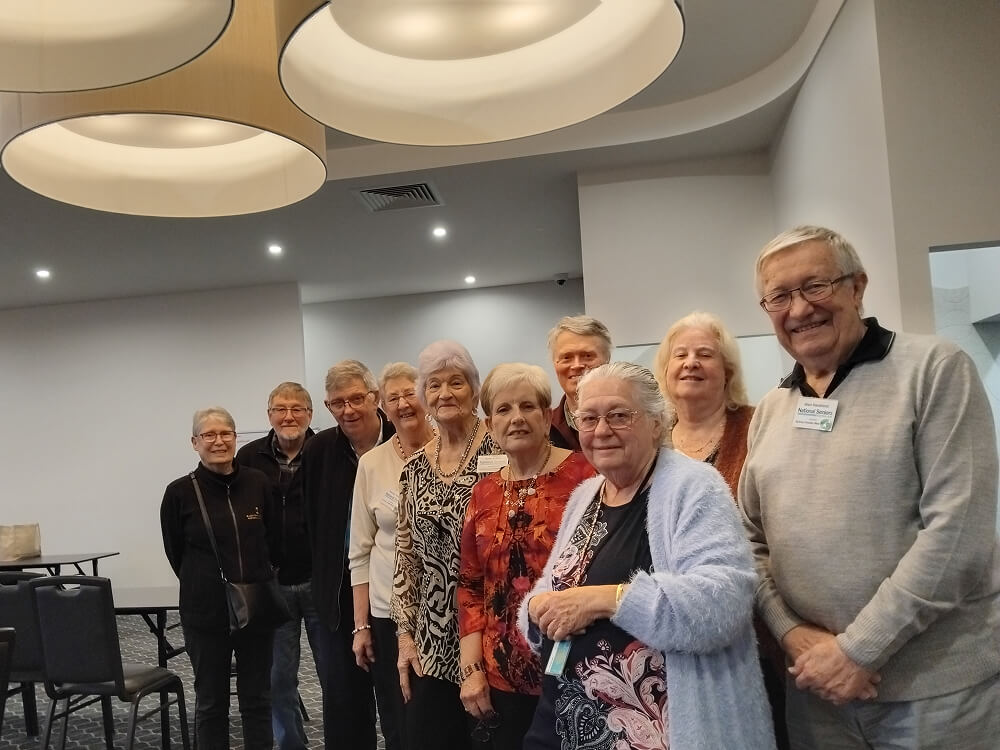
Seniors from across Western Sydney who met at Blacktown RSL’s Sapphire Room on Thursday, 21 May. Photo by Elizabeth Frias
“Older Australians continue to be shocked by the decision and overwhelmingly reject the proposal,” the NSA chief executive Chris Grice said.
The NSA findings estimated 2.5 million seniors relying on subsidized healthcare are impacted, and those on fixed low incomes are likely to drop insurance cover altogether that could drive up costs on public hospitals absorbing their needs.
“As many as 45 per cent of people relying on pension and limited savings will cut spending on essentials if this cut to the rebate is made law,” Grice said.
Their research found many older Australians wished to retain private healthcare cover “even at great cost to themselves”, Grice said.

Council on the Ageing Australia chief executive officer Patricia Sparrow. Photo supplied by COTA Media.
The Council on the Ageing CEO Patricia Sparrow cited findings on intergenerational inequity in the State of the Older Nation 2025 report.
“It’s important to remember that one in four older Australians lives in poverty, while only 28 per cent are financially comfortable,” Sparrow said.
“The stereotype of the ‘rich boomer’ is lazy, divisive and wrong. Older Australians are not a single, uniformly wealthy group.”
Both NSA and COTA welcomed the wins that fund 5,000 new aged care beds each year to transfer seniors stuck in hospitals to proper aged care homes, 20 new Specialist Dementia Care Units for those with complex care and making Support at Home Program free for seniors so they don’t pay costs for showering, continence management and dressing.
Opposition Leader Angus Taylor’s budget reply vowed the Coalition would repeal negative gearing and CGT changes, reject the cut in seniors’ health insurance rebates, and allocate $600 million health support for veterans to restore a “generous safety net” needed by struggling older Australians.
Grice said their 290,000-member community branches across Australia already garnered strong support for an urgent Productivity Commission review of the private health system, find out how to reduce cost on health insurance, rising specialists’ fees and fair hospital charges.
“At a time in their life when they need health insurance, affordability is paramount, and it has been swept under their feet. That call will only get louder,” Grice said.
Seniors gained these allocations from the treasury budget papers:
- $1.7b to build 5,000 aged care beds per year
- $25b additional funding for public hospitals for the next 5 years
- $1.8b for 137 Medicare Urgent Care Clinics
- $11.4b for bulk billing
- $583.4 million for the healthcare of veterans and serving defence forces
- $169.7 million for allied health services for veterans
- $1,000 instant tax deduction for work-related expenses for seniors in the workforce
- $250 annual tax offset from 2027-28 for seniors in the workforce to help ease cost-of-living pressures
- $5.9b to list new medicines on the Pharmaceutical Benefits Scheme
- $224.3 million for dementia care and specialist dementia programs
- $449.3 million to provide free Respiratory syncytial virus (RSV) vaccine for those aged 70 and older
- CGT 50 per cent discount continues for properties held before 1 July 2027
- Negative gearing remains only for properties held before 1 July 2027
- Reduced fuel excise at 32 cents per litre on petrol and diesel for those in outer suburban and regional areas
- Full pension supplement (basic $30.10 per fortnight for singles, $24.80 each for couples) for 12 weeks on seniors travelling from 20 September 2026
What else did seniors lose?
- Negative gearing on properties purchased after 1 July 2027 will be indexed according to inflation at minimum 30 per cent tax rate
- Minimum 30 per cent tax on net CGT for properties held after 1 July 2027
- CGT changes apply to shares, properties, trusts and partnerships
- Future gains under indexation on existing shares, exchange-traded funds and managed funds held from 1 July 2027
- Pension supplement around $783 annually for Australian seniors travelling overseas stops after 12 weeks effective 20 September 2026
- Pension supplement payments stop for seniors who move overseas permanently effective on the day they depart from Australia
- Around 88,000 seniors Australians residing overseas will lose pension supplement effective 20 September 2026
Elizabeth Frias is a retired journalist currently working part-time and volunteer branch coordinator at National Seniors Australia in the Hawkesbury.