By Elizabeth Frias
As many employers struggle to fill vacancies, one group of jobseekers continues to prove its worth – older workers.
A recruitment specialist in Western Sydney says applicants aged over 60 are often the most dependable candidates she places, describing them as a solution to the chronic staff shortages many businesses face.
Speaking anonymously, she said older workers consistently delivered on their commitments.
“They tell us they can work 15 hours a week and they mean it. If they say they’ll be there, they’ll be there,” she said.
“One of our clients actually prefers employing older workers because they are reliable, experienced and bring strong ethical values to the workplace.”
She said some employers had become frustrated with younger employees who frequently failed to turn up for shifts or offered questionable excuses.
“We’ve had people call in saying their cat died or their car broke down. Then we check social media and they’re at the beach,” she said.
“Others call in sick and obtain medical certificates online while the employer still has to pay their leave entitlements.”
For many businesses, older workers are providing the stability and commitment that employers desperately need.
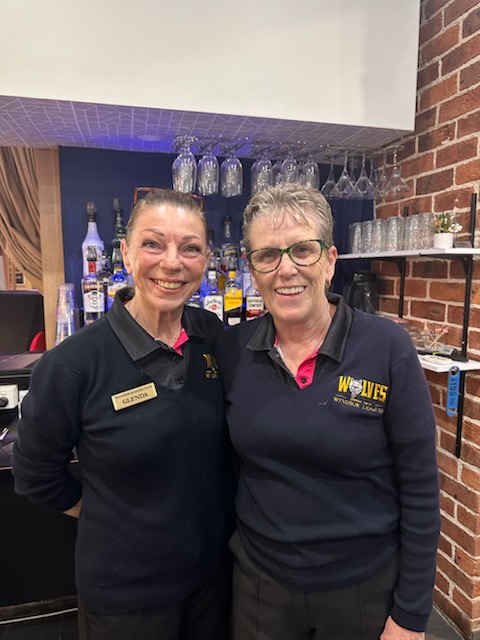
Among those embracing an age-diverse workforce is Windsor Leagues Club in South Windsor, where employees range in age from 19 to 69.
CEO Michael Pullin said employing people of different ages strengthened the club’s day-to-day operations.
Long-serving employees such as 69-year-old Glenda, 62-year-old Lee, Operations Manager Collette, Maintenance Manager Robbo and bus driver Lawry remain enthusiastic contributors and have no plans to retire anytime soon.
Glenda has worked behind the bar for 25 years and says the people are what keep her coming back.
“The best part of my job is meeting new people and welcoming back familiar faces,” she said.
“Seven of my eight grandchildren have played for the Wolves, so I always say, ‘I’ll be here.'”
Pullin said experienced staff like Lee, who started in the kitchen 30 years ago and is now a manager, provide far more than experience.
“They provide stability to our day-to-day operations,” he said.
“They are reliable, experienced and connect exceptionally well with many of our members and guests.
“Their dedication, warmth and genuine care for people make them valued members of our team, and we’re incredibly grateful for the contribution they make every day.”
The experiences of employers like Windsor Leagues Club support what National Seniors Australia (NSA) has been advocating through its “Let Pensioners Work” campaign since 2022.
Backed by research from its Productive Ageing Institute and Deloitte Access Economics modelling, the organisation is calling on the Federal Government to exempt employment income from the Age Pension income test.
The proposal would make it easier for pensioners to supplement their income without losing pension payments, encouraging more older Australians to remain in the workforce if they choose.
NSA Chief Executive Officer Chris Grice said the changes would benefit both older Australians and employers facing ongoing labour shortages.
He said Deloitte’s modelling showed exempting work income from the pension income test could be cost-neutral for government if just 8.3 per cent of pensioners filled vacancies in the health care and social assistance sectors.
“There is a real opportunity for employers to look at how they can better integrate older people into the workforce,” Grice said.
“They have extensive experience across a wide range of industries and are well placed to mentor younger employees.
“While there is a need for older workers, we must make sure ageism isn’t getting in the way because they have so much to offer.”
The health and care sectors remain among Australia’s biggest areas of workforce demand. Australian Bureau of Statistics figures previously identified more than 320,000 job vacancies nationwide, with health care and social assistance recording one of the highest vacancy rates.
An NSA survey of 3,938 Australians aged over 50 found that more than half would consider returning to work, with financial pressures the main motivation.
At the time of the survey, 17 per cent had already returned to paid employment.
Respondents included retirees, part-pensioners, carers and veterans. Many said they were willing to work but faced barriers including age discrimination and complex pension income rules.
Many also rejected the stereotype that older Australians lack digital skills, saying they were far more technologically capable than many people assumed.
Grice said employers regularly praised the quality of older workers, particularly in sectors such as aged care.
“We hear great things from employers about older workers, especially in aged care where many care recipients appreciate dealing with someone with life experience and a mature outlook,” he said.
National Seniors Australia is urging the Albanese Government to trial changes to pension income rules within the health and social assistance sector before extending them to other industries.
Current Centrelink rules mean Age Pension recipients can earn up to $218 a fortnight before their pension begins reducing. For couples, the combined income threshold is $380 per fortnight.
Pensioners returning to work may also be eligible for the Work Bonus, including a one-off $4,000 credit that allows them to earn more before their pension is affected.
However, Grice believes the current system remains too complicated.
“People have to report their earnings to Centrelink, and many tell us it’s time-consuming, confusing and even humiliating,” he said.
“NSA regularly hears from retired nurses and teachers who want to continue working, but they decide it’s simply not worth it because they’re penalised by the income test.”
As Australia’s population ages and labour shortages continue across many industries, employers are increasingly discovering that experience, reliability and commitment don’t come with an age limit.
For many older Australians, the willingness to work is there. The question is whether workplaces and government policy are ready to give them the opportunity.
Elizabeth Frias is a retired journalist working part-time with the Independent Magazines Group and a volunteer Branch Coordinator for the National Seniors Australia Hawkesbury Social Branch.