with Michelle Nichols & Jonathan Auld
Not far from picturesque Mount Wilson lies Mount Irvine. Known for its rugged beauty and surrounding scenery, it forms part of the World Heritage Blue Mountains.
Located on a basalt plateau, the area now known as Mount Irvine and the adjoining Mount Wilson was originally surveyed by William Govett in 1832, who described the surrounding vegetation on his map as ‘almost impenetrable scrub’. In the 1860s, George Bartley Bowen explored the area which led to the eventual settlement of Mount Wilson.
The settlement of Mount Irvine came later when Charles Scrivener, a surveyor with the Lands Department, was examining the site of a road, north west of Mount Tomah in the 1890s.
Who was Scrivener and how did he help shape Mount Irvine?
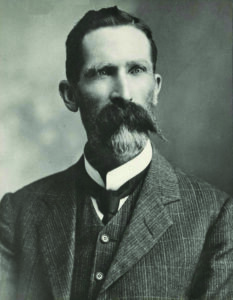 Charles Robert Scrivener was born in 1855 in Windsor, the son of Charles Ambrose Scrivener, a bookbinder, and Jane nee Passefield, both from London. By 1874 he was recorded as a draughtsman, and the following year, he entered the Department of Lands. From 1877 he was an apprentice surveyor. Scrivener qualified as a licensed surveyor in 1880 with a perfect score. Over the years, he was employed at Webbs Creek, Maitland, Wagga Wagga and Hay, and was acknowledged as a capable bushman. Scrivener was requested to conduct a survey for a road on the outskirts of Mount Wilson in 1897. He was working in the area around Bowens Creek to Bells Line of Road, looking for access from Mt Wilson. Impressed with the rugged surroundings, he made a suggestion for the area to be proclaimed as a national park. This didn’t happen so the land was released for settlement but some land was set aside as a reserve.
In mid-1897, Scrivener was accompanied by his son Charles and two friends, Basil Knight-Brown and Harold Morley. They left Bilpin and set up a camp inside a cave. By clearing the almost impenetrable bush, they were successful in surveying and applying for a conditional pardon of 1000 acres. The young men returned in 1898, following their graduation in 1897 from Hawkesbury Agricultural College at Richmond, now Western Sydney University.
It was reported in the local newspaper, that six selectors had taken up land at Mount Irvine, and the land was described with “surpassing beauty and fruitfulness” but the “means of access difficult.” It appears that while Mount Wilson was established as a place of sanctuary and relaxation, Mount Irvine commenced as an agricultural community.
The holdings ranged between six to one hundred and twenty hectares, covered with volcanic soil with dense forest and a good water supply. The first landholders cleared their land, constructed basic shelter and planted crops and some orchards. Basil Knight-Brown’s mother Lucy was recorded as the first European woman to reside at Mount Irvine, she arrived in 1898.
Access remained a big issue, and for many years the Mount Irvine landholders worked on the road four weeks each year. In 1898 the State Government approved a special £50 grant for additional improvements to the road.
As the years went by, and roadways improved, more people settled at Mount Irvine, but it was only ever a small village. To process the timber resources in this remote area, the Anderson Brothers set up a sawmill in 1904. A few years later, it was destroyed in a bushfire, but later rebuilt. A Progress Association started in 1905 and Edward Knight-Brown, Basil’s father, was elected as the first president.
A weekly postal service started in 1906 with an official postal building opening in the 1920s. The first election for Colo Shire Council was in 1906 with Mount Irvine originally coming under their umbrella. When the Local Government boundaries altered in 1960, it was transferred to Blue Mountains Council.
Like Mount Wilson, there were few public buildings. Regular church services were held in Mount Irvine from 1918 in local homes then later in the school building. Classes were conducted from the early 20th century and Scrivener donated £200 for the building of a school. His son provided one acre of land and the school opened around 1920 with twelve students. It operated until the early 1930s.
A telephone exchange opened in the 1920s, a vital service for the residents of the area. A CWA Branch started in 1929 in conjunction with Mount Wilson and meetings were held in alternating localities. In 1962 electricity arrived to Mount Irvine. The following year the hall was established on the old school site.
Charles Robert Scrivener is better known for his involvement of establishing the nation’s capital. Following Federation in 1901, there was much discussion about where a capital would be built. Scrivener was appointed as the surveyor to locate the best sites.
He suggested the location in 1909 with Canberra named in 1913. The Scrivener Dam in the ACT was named in his memory. In 1910, Scrivener became the first director of Commonwealth lands and surveys but following disputes about the layout of Canberra, he retired five years later.
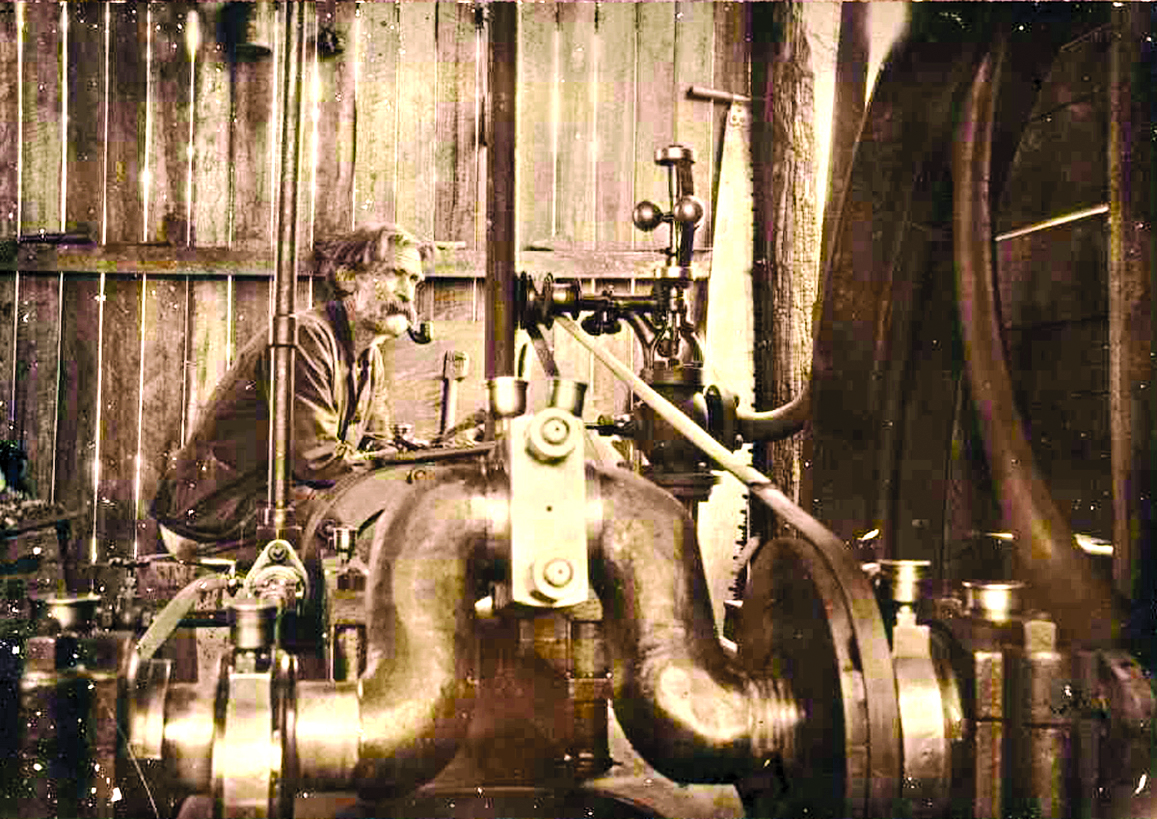
After his retirement, Charles settled at Mt Irvine where he was involved with a timber mill and conducted some surveying for local councils. He built ‘Taihoa’ in Mount Irvine, which had hexagonal shaped rooms and planted avenues of chestnut and walnut trees. Charles died in 1923 in Killara and was buried in the Northern Suburbs cemetery.
Charles married three times. His first wife was Eugenie Rogers who he married in 1878 and they had three children. Eugenie died in 1883. In 1885 Charles married Mary Harding who died twelve months later, only days after giving birth to son Robert. His third marriage was in 1889 to Margaret Pike and together they had five children.
Scrivener’s son Charles, died in 1934 and he is one of the earliest burials commemorated in the Mount Irvine cemetery. Descendants of the Scrivener family are still associated with Mount Irvine.
Today Mount Irvine remains a secluded community with only a handful of people living in about forty properties.
MAIN PHOTO: Charles Scrivener sitting by a steam engine, Mount Irvine sawmill 1920s. Photo courtesy of the National Library of Australia.
INSET PHOTO: Portrait of Charles Robert Scrivener. Photo courtesy of the National Library of Australia.